
The greatest lie ever told about travel is that it is a reward for the wealthy. We are conditioned to believe that a plane ticket is a trophy for years of desk-bound labor, and that “seeing the world” requires a five-figure savings account.
If you are sitting at your kitchen table with $12 in your pocket and a heart full of wanderlust, listen closely: Your lack of funds is not an obstacle; it is a strategy. When you have no money, you are forced to engage with the world in a way that wealthy tourists never will. You won’t be insulated by glass tour buses or sterile hotel lobbies. You will be on the ground, trading skills for soup, labor for a bed, and stories for a ride. This is the blueprint for how to see the world when you’re starting from absolute zero.
Step 1: The “Financial Fast” (The 30-Day Launchpad)
You cannot leave your front door without enough money for a passport and a one-way flight. If you have zero savings, you need a “Financial Fast.”
For the next 30 days, your life becomes a mission of liquidation.
- The Stuff-to-Cash Pipeline: Look around your room. Every gadget you don’t use, every jacket you haven’t worn in a year, and that dusty bicycle in the garage is a train ticket in disguise. Sell it all on Facebook Marketplace or Depop.
- The “Luxury” Audit: Cancel every subscription—Netflix, Spotify, the gym. If you aren’t using it to earn money or learn a language, it’s a leak in your boat.
- The “Beans and Rice” Diet: Stop eating out. Period. Every $15 spent on a burrito is a day’s worth of food in Vietnam.
Your goal for this month is to scrape together $1,200. This is your “Escape Velocity” fund. It covers a passport, travel insurance, and a one-way ticket to a low-cost region.
Step 2: Destination Arbitrage (Go Where You Are Rich)
If you have very little money, you must go where that money has “superpowers.” This is called Geographic Arbitrage. If you take $500 to New York City, you’ll be broke in three days. If you take $500 to Northern Thailand or parts of Central America, you can live like royalty for a month.
The Beginner’s “Broke” Map:
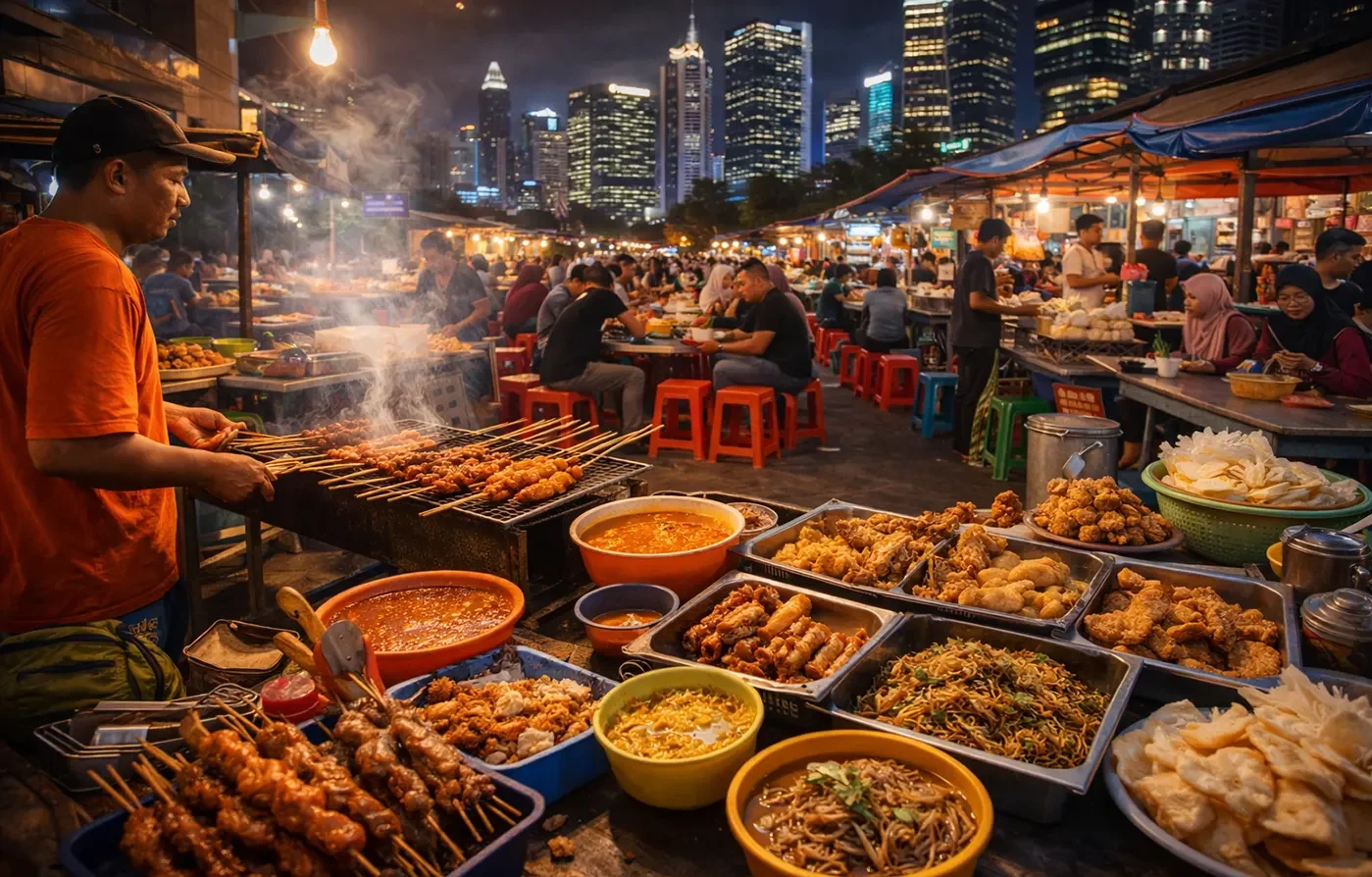
- Southeast Asia (Vietnam, Cambodia, Northern Thailand): The gold standard. You can find hostel beds for $5 and world-class street food for $2.
- The Balkans (Albania, Bosnia, Bulgaria): Europe’s best-kept secret. It has the charm of Italy but the prices of a thrift store.
- The Caucasus (Georgia): One of the most hospitable countries on earth with an incredibly low cost of living and a year-long visa for many nationalities.
Step 3: The “Work-Exchange” Economy
This is the “secret sauce” of traveling with no savings. You don’t need to pay for hotels if you are willing to get your hands dirty.
Platforms like Worldpackers, Workaway, and WWOOF (World Wide Opportunities on Organic Farms) connect travelers with hosts who need help. You typically work 20–25 hours a week in exchange for a bed and three meals a day.
- The Hostel Hustle: Help with reception or bar shifts in a hostel in Bogota. You get a free bed, free breakfast, and an instant social circle.
- Eco-Farming: Learn permaculture in the hills of Tuscany. You’ll live in a beautiful farmhouse and eat the best organic food of your life for $0.
- Social Projects: Teach English to monks in Laos or help with an after-school program in Peru.
Step 4: Mastering the “Free” Housing Skills
If you don’t want to work for your bed, you can “borrow” one.
- Housesitting: Websites like TrustedHousesitters allow you to stay in luxury homes for free while the owners are away. The “catch”? You have to walk their dog or water their plants. It is the highest-value travel hack in existence.
- Couchsurfing: This is the ultimate test of the “Broke Traveler.” You stay with locals who simply want to meet travelers. It requires a high level of safety awareness and a genuine desire to be social, but it costs nothing and offers the most authentic cultural immersion possible.
Step 5: Earning as You Move
To make travel sustainable, you need an income stream that doesn’t depend on your location. You don’t need a high-level tech job; you just need “Internet Money.”
- The TEFL Route: Get a TEFL (Teaching English as a Foreign Language) certificate online. You can earn $15–$25 an hour teaching students in China or Japan via your laptop. In a country like Vietnam, working just 10 hours a week will cover all your expenses.
- Micro-Freelancing: Can you write? Can you edit videos? Can you manage a Pinterest account? Use sites like Upwork to find small gigs.
- Seasonal Labor: If you are under 30 (or 35 in some cases), look into Working Holiday Visas for Australia or New Zealand. You can pick fruit or work in cafes, earning high Western wages while living a traveler’s life. Many people leave Australia with $10,000 in savings after a year of work.
Step 6: The “Broke Traveler” Survival Rules
- Never Pay for Water: Carry a filtered water bottle (like a Grayl or Lifestraw). You’ll save $3 a day and reduce plastic waste.
- The 5-Block Rule: Never eat within five blocks of a major tourist attraction. Walk further until the menus are no longer in English. The food will be better and 70% cheaper.
- Walk Everywhere: Taxis are for people with luggage and no time. You are a traveler; you have nothing but time. Walking is the only way to find the “hidden gems” everyone writes about.
- Night Transport: Need to get from Prague to Krakow? Take the night bus. It’s your transportation and your “hotel” for the night combined into one ticket.
Step 7: The Safety Net (Don’t Be Reckless)
Traveling broke is an adventure, but traveling “stupid” is a disaster.
- Travel Insurance: Never, ever leave without it. Use a subscription-based service like SafetyWing. It’s cheap (around $45/month) and will save you from a $50,000 hospital bill if things go wrong.
- The “Emergency Stash”: Keep a $100 bill hidden in a secret pocket of your backpack. It never gets touched unless it is a “get me to the embassy” type of emergency.
The world is much kinder than the news leads you to believe. When you travel with no money, you are forced to rely on the kindness of strangers, and in doing so, you discover that most people are fundamentally good.
Starting from zero isn’t a deficit; it’s a clean slate. You aren’t tied down by a mortgage, a car payment, or a career ladder. You are the most mobile person on the planet. Sell your stuff, buy the ticket, and trust that you are resourceful enough to figure out the rest. The world is waiting for you—and it doesn’t care about your bank balance.